Four engines, one scan
All four engines get the query at the same moment instead of in a queue, so results come back in 30–45 seconds.
Ask ChatGPT, Claude, Gemini and Perplexity the same question at once. Each keyword comes back with mentions, position, share of voice, sentiment and a 0–100 visibility score.


 Search & Track
| Keyword | Engines | Position | Score | SoV | Δ wk |
|---|---|---|---|---|---|
| best crm for startups | | Top | 81 | 44% | ▲ 6 |
| crm with email sync | | Top | 64 | 31% | ▲ 3 |
| simple sales pipeline tool | | Mid | 52 | 22% | 0 |
| crm for small agencies | | Mid | 33 | 14% | ▼ 4 |
| free crm alternatives | | Bot | 18 | 6% | ▲ 2 |
Sample results for illustration
One click sends the query to all four engines at once
ChatGPT
Claude
Gemini
Perplexity
Plenty of buyers now ask an assistant which tool to pick before they open Google. Track Keywords shows how each engine answers the queries you care about.
All four engines get the query at the same moment instead of in a queue, so results come back in 30–45 seconds.
Every keyword gets a 0–100 visibility score and a band: Weak, Average, Strong or Excellent.
Each answer is tagged positive, neutral or negative. A mention that calls you pricey is not a recommendation.
Behind the results table sit four views. They explain where each number came from and suggest what to track next.
One 0–100 number built from five signals in the AI answer, so you can compare keywords and engines side by side.
Top, Middle or Bottom of the response
How many times the brand is named
The tone of the mention
How clearly the answer recommends you
How many rivals share the answer
Your mentions counted against competitor mentions in the same AI answers, broken out for every keyword you track.
Filter by brand or category, or just search. Platform badges show which engines each keyword ran on. Bulk import from CSV or Google Sheets.
Average visibility, sentiment mix, top recommendations and related keywords to add, sitting next to your results table.
Organic Rankings covers the classic results page. Track Keywords covers what answer engines say. They measure different things, so Linkstonic keeps them in separate modules.
Where your pages rank on Google.
How AI engines talk about your brand.
Classic SEO: keyword positions by country, position history and landing pages.
Explore Organic RankingsAI visibility: whether assistants recommend you, and how they describe you.
Start tracking freeType them in, upload a CSV or pull them from Google Sheets. Group them by brand, category or campaign.
Choose the brands and the engines you want checked, then click once. Every selected engine runs in parallel.
Look at the score, position, share of voice, competitor mentions and weekly change. Put an Alert on anything you need watched.
Every Monday you run your 48 tracked CRM keywords across four engines and read the weekly change column first. This week "crm for small agencies" dropped 4 points, sentiment is neutral and RivalOne holds 41% of mentions, so you're simply missing from ChatGPT and Gemini. You put an Alert on that query to see if a homepage edit helps.
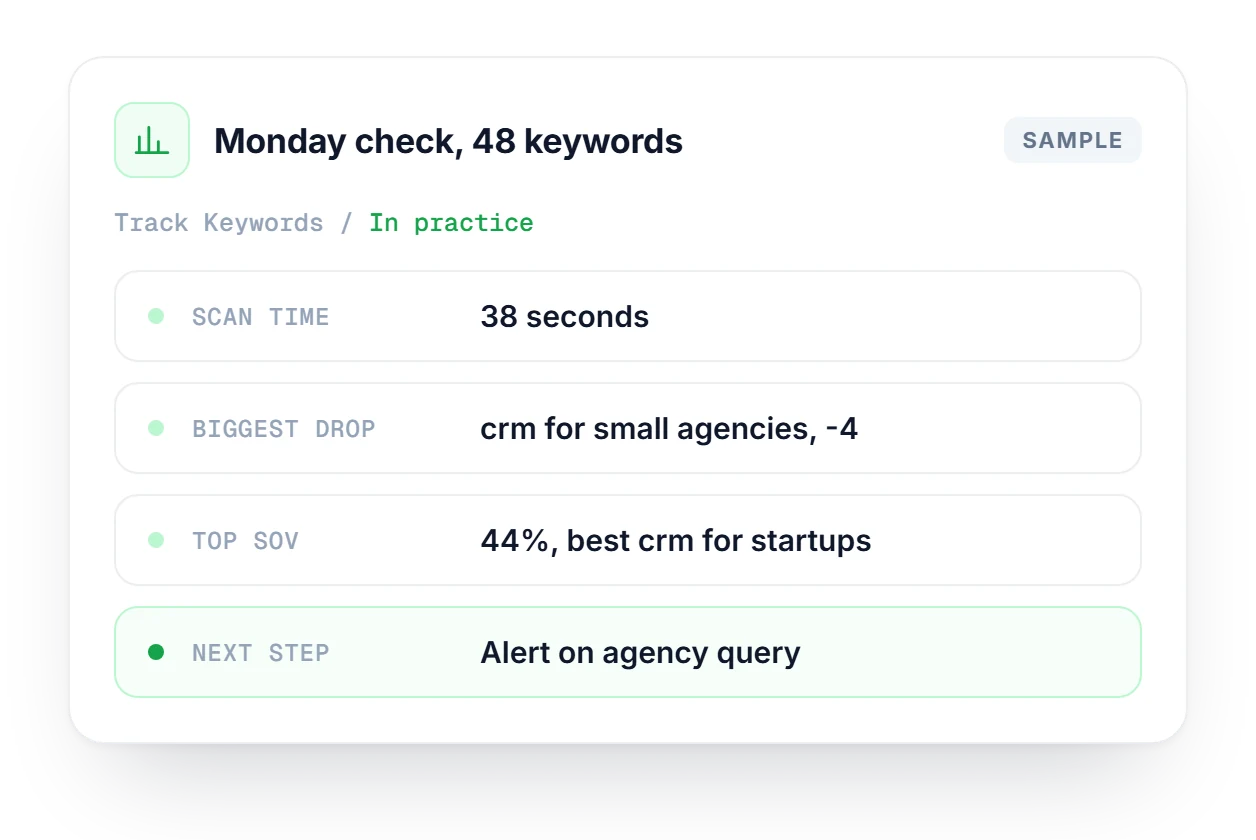
How Track Keywords scans, scores and compares your brand across AI engines.
See how many keywords and engines each plan includes.
Compare plans →We track ChatGPT, Claude, Gemini and Perplexity, the four platforms where the vast majority of AI search happens. All four are queried in parallel on every scan, so their answers arrive together, usually within 30 to 45 seconds.
The score blends five signals from the AI answer: position (Top, Middle or Bottom), mention count, sentiment, confidence and competitor density. You get a number from 0 to 100. 75 and up is Excellent, 50 and up is Strong, 25 and up is Average, and anything under 25 is Weak.
Yes. Add competitor brand names next to your own and you'll see how each one gets mentioned for the same queries. Share of Voice then puts your mentions and theirs side by side, keyword by keyword.
Weekly is a sensible default, because AI answers shift often and a weekly run gives you a trend line you can actually read. For keywords where a drop would really hurt, set up Alerts so you hear about changes without checking by hand.
Track Keywords measures how AI engines mention your brand in their answers, which is LLM visibility. Organic Rankings tracks classic Google SERP positions. You need both, and they live in separate modules so the two sets of numbers never get mixed up.
Free to start, no credit card, no commitment. Add one keyword, run a scan and read your first visibility score a minute later.