SEO tickets lose to bugs
An "improve SEO" ticket loses to a product bug every time, because nobody can say what it's worth. A specific, ranked task gets picked up.
Pre-seed landing page or Series B content team, the job is the same: keep the public site in good technical shape, and find out how assistants describe your category before a competitor sets the terms.
best expense tool for small teams


Sample workspace for illustration
Small teams can't pay for five niche tools or a full SEO hire. They still need to know what's broken and what to fix first, and more and more, what AI says about them.
An "improve SEO" ticket loses to a product bug every time, because nobody can say what it's worth. A specific, ranked task gets picked up.
Most founders learn how ChatGPT talks about their space when a prospect forwards a screenshot.
Marketing ships a landing page every week. Nobody checks schema, speed or redirects on all of them.
Run a technical audit in minutes and work through the fixes in plain language. Connect Search Console when there's enough traffic to read. Alerts and integrations can wait until you need them.
Check public pages before a big announcement or Product Hunt day. Engineers get tasks ranked by severity, each with a plain-language fix, instead of a vague "improve SEO" note.
Learn what assistants say about your category before you spend money on outbound or events. You see if they treat you as a leader, an also-ran, or leave you out.
ChatGPTPerplexityClaudeGeminiOnce you have some traction, connect the same property to Google Search Console. The queries people type then sit next to your audit and AI data.

Find out when something breaks, or when a competitor starts showing up first in AI answers, even if the whole company is three people. Add more alerts as the roadmap grows.
A raise, a pivot, your first marketing hire, the point where organic becomes a real channel. Each is easier when the data is already there.
Show investors that your marketing site is actually monitored, and have a straight answer when they ask how AI search affects your acquisition risk.
Compare AI answers before and after a messaging change to see if assistants picked up the new story.
"yourstartup is a personal budgeting app for freelancers."
Old positioning"yourstartup is an expense tool built for small teams."
Matches new messagingGive them a working toolkit on day one instead of a blank wiki page, and make the handoff clean when a full-time SEO lead joins later.
Get off paid-only acquisition without hiring an agency on day one. Organic growth shows up in the same data your team already checks.
Marketing site, docs or waitlist page. Whatever faces buyers. A one-pager is enough to start.
Get a ranked fix list, then share the PDF-friendly summary with advisors or your first technical hire.
Add Search Console and AI prompts once there is traction to measure. Alerts and integrations come later.
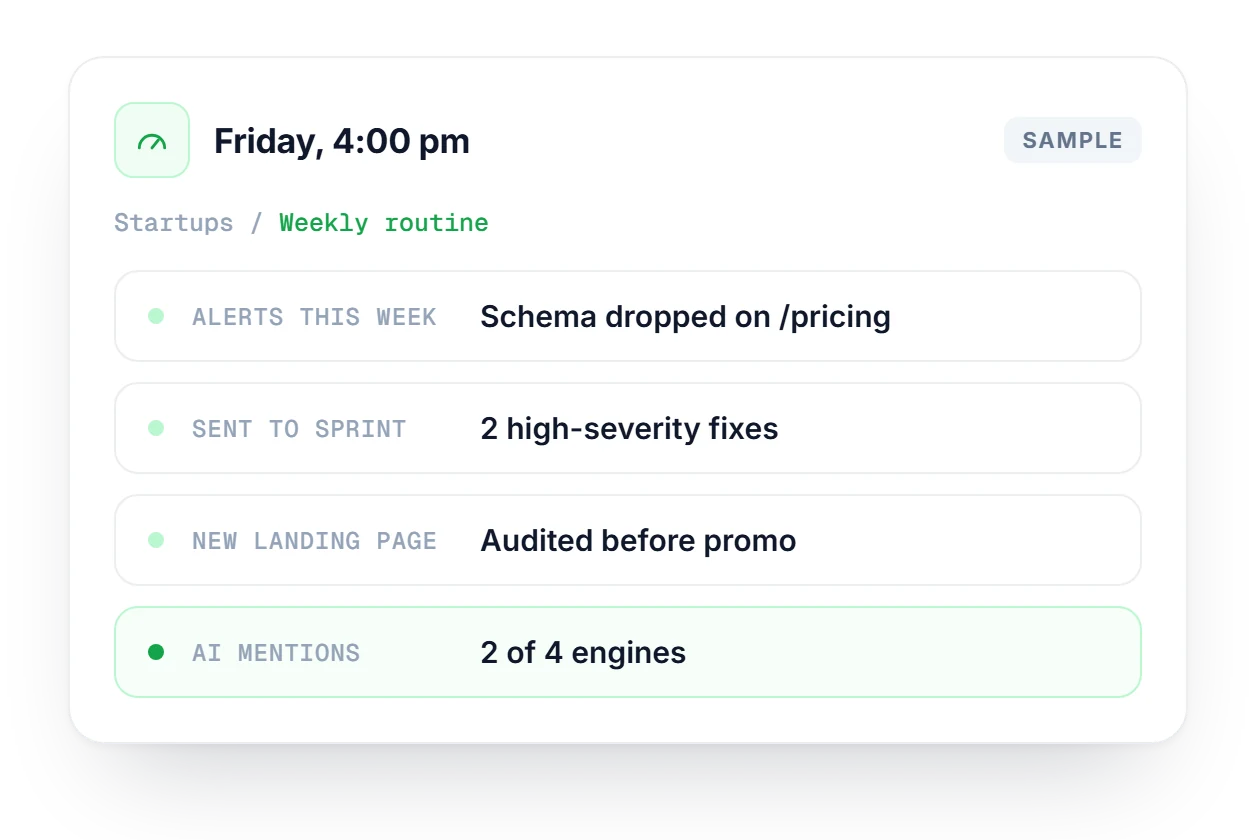
One founder takes Friday afternoon, an hour at most, and starts with the week's alerts, like structured data dropped from /pricing. They send the top two high-severity fixes to the sprint and audit any new landing page before promoting it. Last, they check whether more engines mention the company than last month.
Full technical audits in minutes, with fixes ranked by severity that your engineers can pick up right away.
Explore SEO AuditBaseline how ChatGPT, Claude, Gemini and Perplexity talk about your category while it's still being written.
Explore AI TrackingGet told when scores or AI mentions move, so a tiny team still has an early-warning system.
Explore AlertsTrials, seats, subdomains, onboarding and what Linkstonic does and doesn't do.
See startup-friendly tiers and upgrade as domains and keywords multiply.
Compare plans →Check the Pricing page for the current offer, since trial terms can change with promotions. You can sign up and start free, then pick a paid tier once you've seen your first audit and fix list.
Better not to. Invite each other as teammates so each founder has their own access. How many seats you get depends on your plan, and your first marketing hire gets added the same way later.
Yes. You can track your marketing site, app and docs subdomains as separate properties if that's useful. Keeping them apart means a docs problem doesn't get buried inside the marketing site's score.
That's enough to start. You can run a baseline audit and track AI prompts for your category today, then add pages, docs and Search Console as the site grows. A one-pager also gives problems fewer places to hide.
No. Linkstonic gives you the data: what's broken, which queries bring people in and what assistants say about you. The writing stays with your team or your agency, and the fix list tells them where to start.
Most teams connect a domain and run their first audit within an hour. Search Console and AI prompt tracking can go in the same day, or later once there's traction worth measuring.
Connect your domain, run your first audit and start tracking how AI describes your category. Startup-friendly tiers on the pricing page.
Our customers
Linkstonic for our team has been a game-changer. It’s helped us work more efficiently, cutting down on manual checks so we can focus on what really matters—measuring AI visibility, fixing technical SEO, and driving growth.
+373%
Increase in
share of voice
 Alerts to DiscordLater